
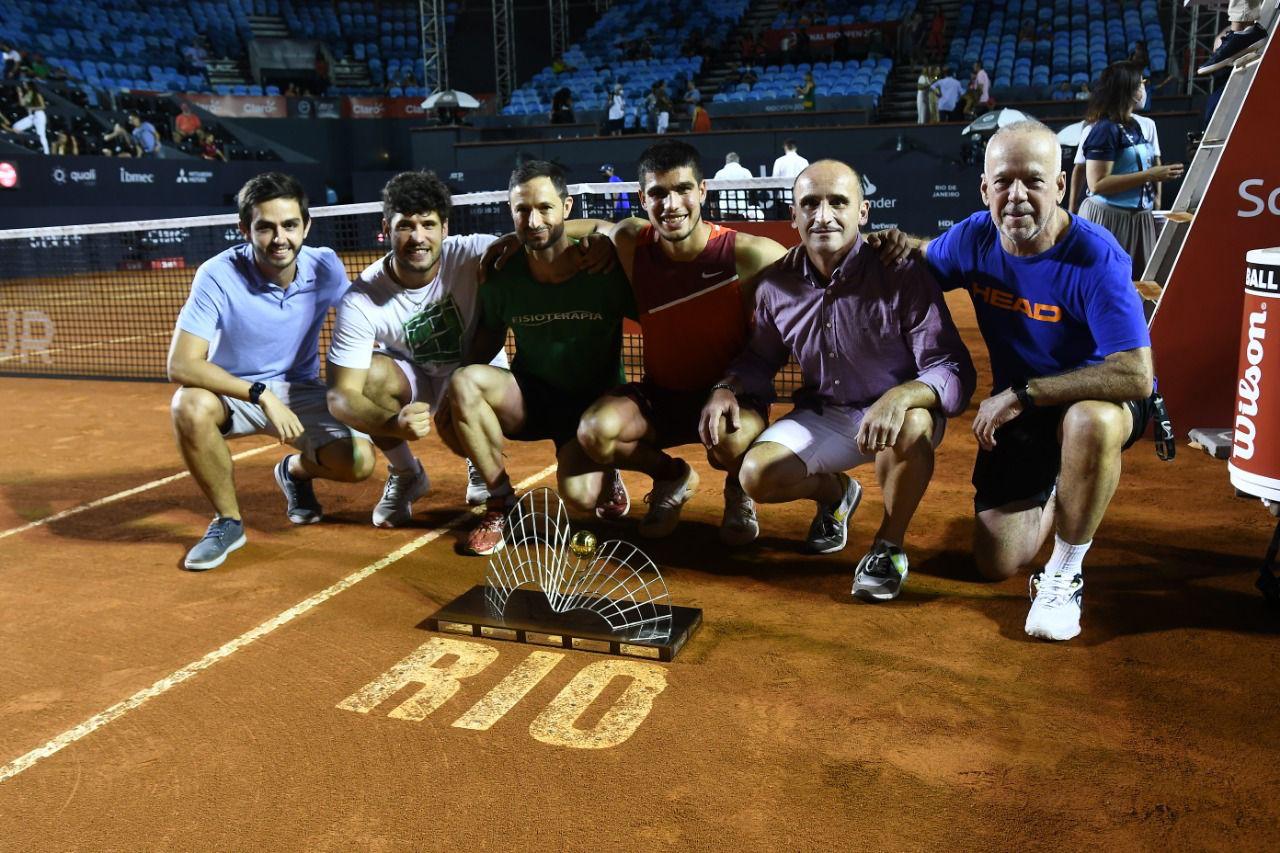
High-performance tennis demands total dedication, but offers very few guarantees of success. At the Juan Carlos Ferrero Academy, that balance between hard work and uncertainty shapes the daily lives of dozens of young people who are all pursuing the same goal: to become professionals.
Leading this process is Iñaki Etxegia, whose background in academia does not fit the traditional profile of a sporting director. His arrival was, as he himself explains, “very humble and with few expectations of advancing as has happened.” While studying Law and Business Administration, he began working as a waiter at the Hotel Ferrero, which is affiliated with the academy itself. His initial goal was to earn some money to help pay for his studies.
However, that first job soon turned into something more. As he took on new responsibilities such as coordination, events, and marketing, he began to put what he had learned in college into practice. “Much of what I was studying […] I was applying at work,” he notes. That gradual growth, coupled with the support of those around him, ultimately shaped his professional path.
Understanding the demands from the inside
 That personal experience shapes the way he approaches coaching today. Working with young athletes involves high standards, and Etxegia is well aware of this: “When you work with young people and demand much more from them than you would from other children their age, you have to be consistent and coherent in your approach.”
His own background allows him to empathize with that pressure. Having had to balance demanding studies with work responsibilities has given him a broader perspective: “My personal development […] has forced me to have that extra level of demand […] and therefore understand the situation of the Academy’s players a little better.” Furthermore, his inside knowledge of the structure, having held various positions, gives him a comprehensive view.
A player-centered model
In recent years, the academy has grown significantly, but its identity remains clear. According to Etxegia, the main distinguishing feature lies in its approach.
That goal translates into decision-making focused on player development: “Even though we’re a business, we strive to make decisions based on what we believe is best for the players.” This approach gives rise to other defining characteristics, such as the atmosphere and the career prospects of its students.
Tennis, however, imposes its own rules. “Tennis is very unforgiving,” he says. And he explains it clearly: “If you don’t make it into at least the top 100 players in the world, you feel like you’re not good enough.” Faced with this reality, the academy’s model aims to make the path as smooth as possible: “The more support you give them so they can focus solely on training and playing, the better.”
The difficult path to the elite
The player selection process reflects this balance between high standards and flexibility. It is the players themselves who contact the academy, initiating a process in which both parties evaluate each other. “It’s important that the player feels comfortable and has confidence in the project as well,” he explains.
From there, various factors are assessed, such as their age, current skill level, and work ethic. The standards vary depending on the player’s stage of development: “The younger the player, the lower the level expected of them […] As they get older, a slightly higher level is required.”
But even within that structured system, the leap to the elite remains uncertain. The academy has produced top-level players, such as Carlos Alcaraz, but Etxegia avoids oversimplifications. “I think there has to be a certain amount of innate talent,” he admits, though he immediately qualifies this: “I’ve seen many players with that talent who ultimately fall by the wayside.”
For him, the real difference lies in other aspects: “I believe that work ethic, humility, and competitiveness are the most distinguishing factors.” He also emphasizes the importance of the process and perseverance.
Managing dreams and frustrations

One of the biggest challenges isn’t technical skill, but emotional management. “It’s a difficult job,” he acknowledges when discussing the pressure young players face. They all share similar aspirations, which leads to constant comparisons: “They all play very well and have those dreams. This results in a lot of comparisons.”
To address this situation, the academy broadens its focus beyond the player: “We work especially with the students, but also with the parents, who are a key component.” The goal is to help them understand that every journey is different—that is, for players to realize that development and timelines are individual and unique to each person.
Values beyond sports
Beyond performance, the academy seeks to instill a set of core values. Among these, Etxegia highlights accepting what you cannot control, overcoming mistakes and learning from them, taking responsibility for your decisions and actions, and the importance of perseverance and daily practice.
These principles, deeply rooted in sports, take on a broader significance in the development of young people.
Technology and the human element
Technological evolution has also reached tennis. Tools for technical analysis, data collection, and performance monitoring are part of daily life. “We can analyze the technical quality of shots, analyze match data, or monitor rest and recovery,” he explains.
However, Etxegia emphasizes a clear limit: “At the end of the day, the human aspect still takes precedence.” The key remains in the relationship with the player: “Knowing your players and how they will listen more, learn more, and be more motivated.”
Looking to the future without losing our identity

Spain will continue to be, in his opinion, a leader in world tennis thanks to structural factors: “the conditions for training and competing […] the good weather, the strong tournament infrastructure, and the tradition.”
Meanwhile, the academy continues to grow, albeit cautiously. “We don’t want to take on more than we can handle,” he says. Maintaining its essence is a priority.
Final advice
For those who dream of pursuing a career in tennis, his message is demanding but clear: “You have to stay true to your dreams. If you want to be the best at something, it’s not enough to just do what everyone else does.”
He adds two key ideas that sum up his vision for both athletic and personal growth: first, you can’t be afraid of failing, and second, you have to enjoy the process.
Interview conducted by El Foco Digital; you can access it by clicking here